01Custom / Solingen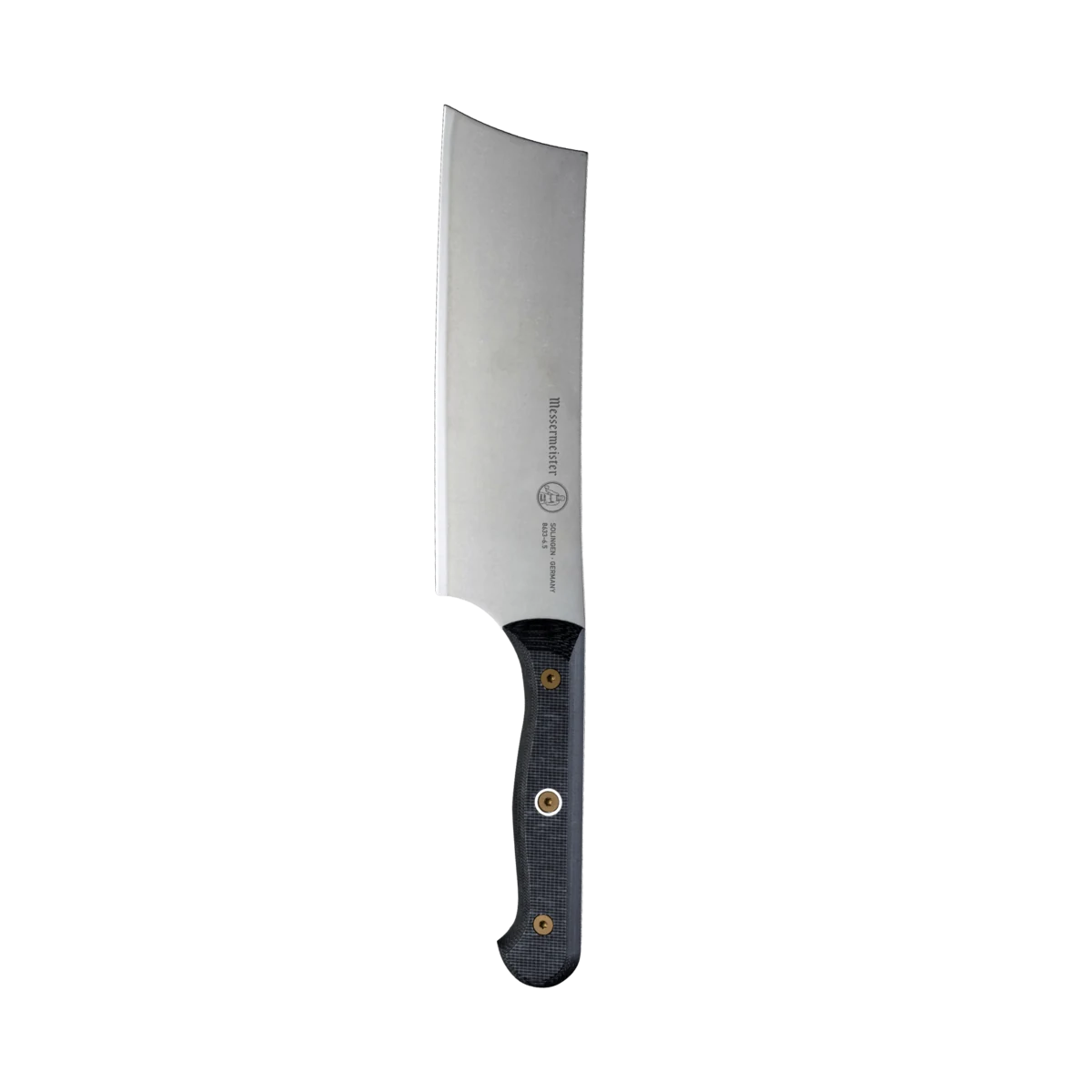
Custom Nakiri Knife
6.5"15° edge · Linen Micarta
$99.95View at Rarely


Rarely presents Messermeister
Eight cutting tools, chosen for the way real people cook—five Solingen-made Custom knives, two field-ready Summit kits, and the shears that earn drawer space.
The Rarely edit / 01
The Custom collection brings modern German steel to the daily cutting board. Adventure Chef packs a full field kitchen into a waxed-canvas case. Different terrain. Same standard.
Meet the lineupThe Rarely edit / All eight
Black linen Micarta for the board. Carbonized maple and distressed linen for the road. One uncompromising pair of shears for everything between.
15° edge · Linen Micarta
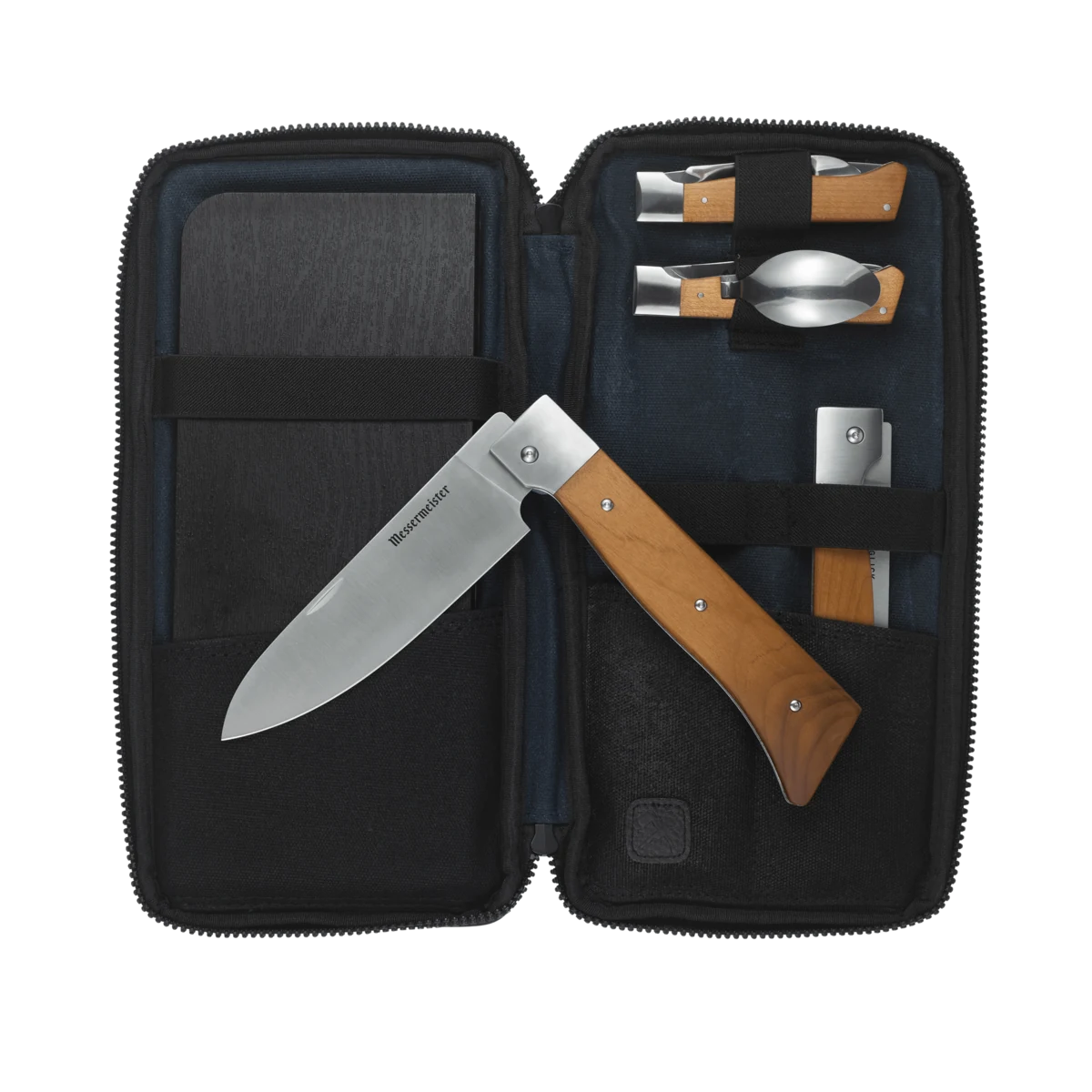
Folding · Carbonized maple
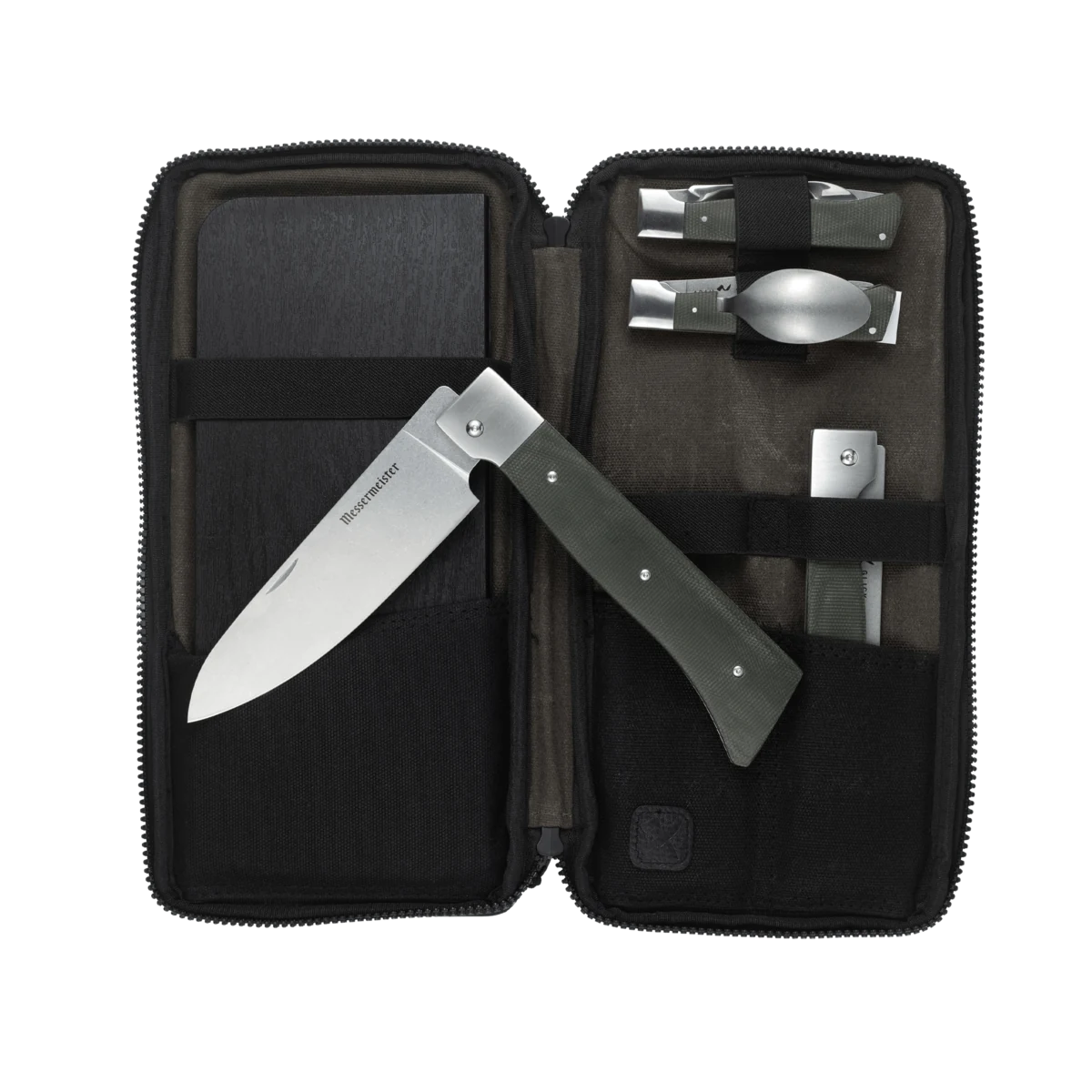
Folding · Distressed linen
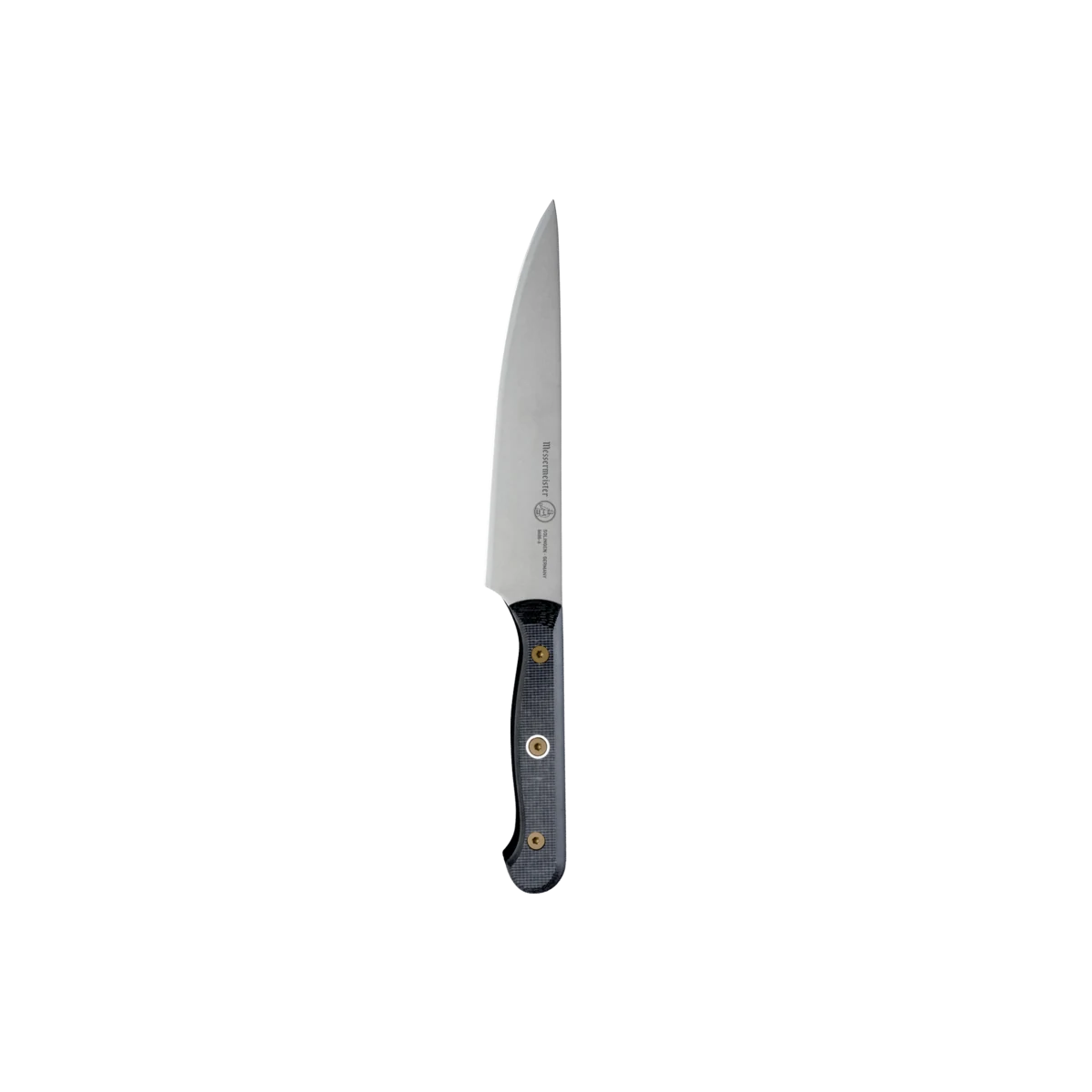
15° edge · Everyday precision
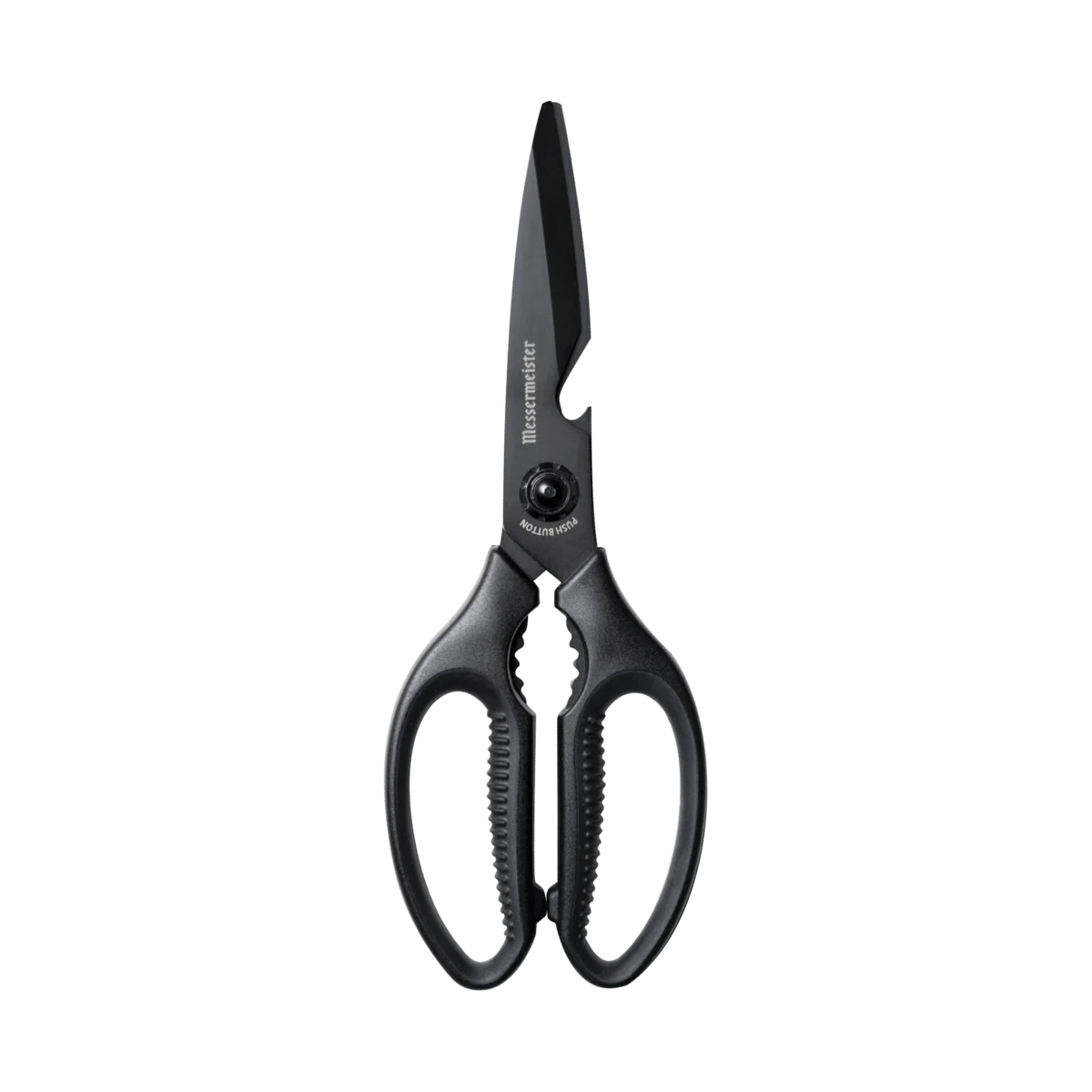
Titanium coated · Take-apart
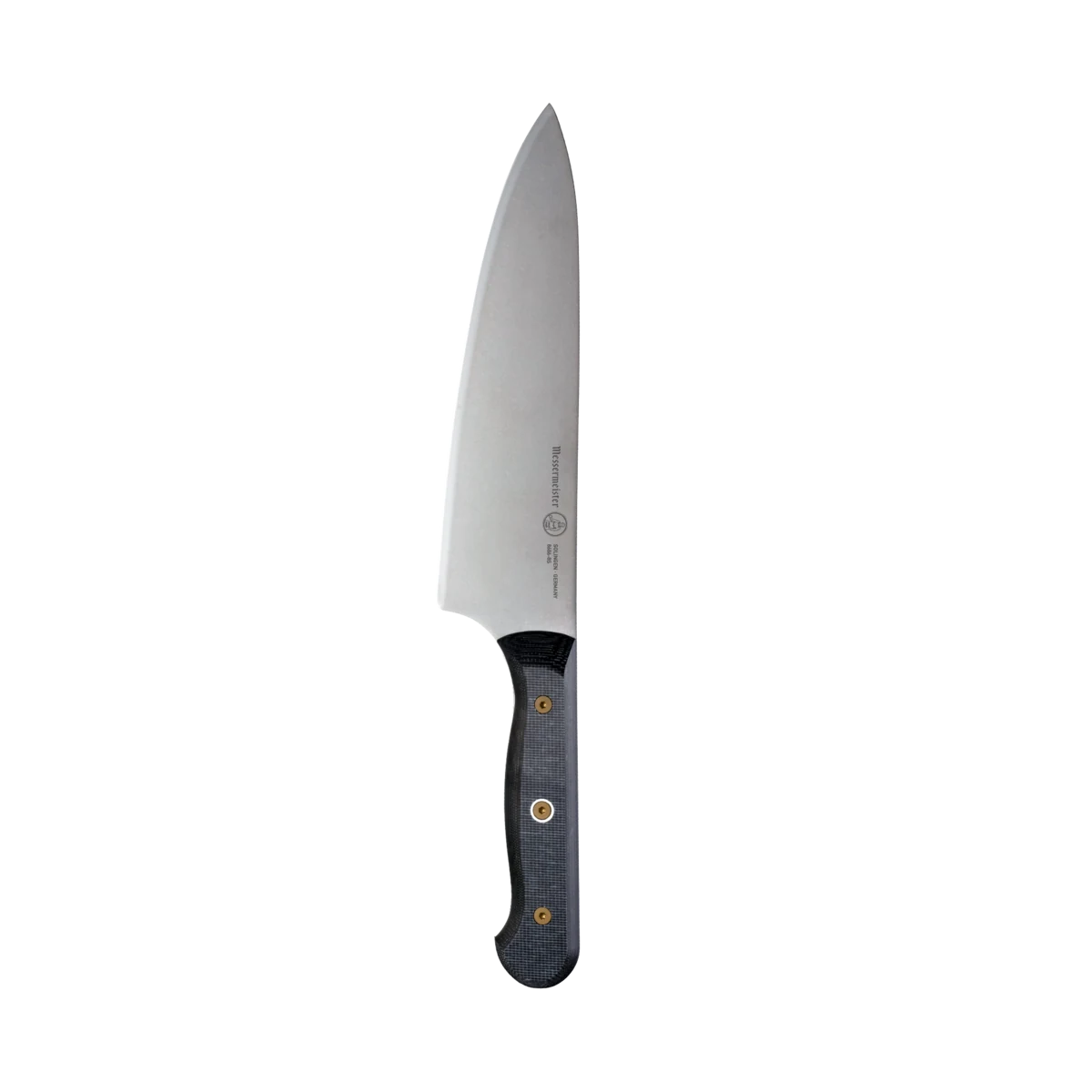
Broad blade · 15° edge
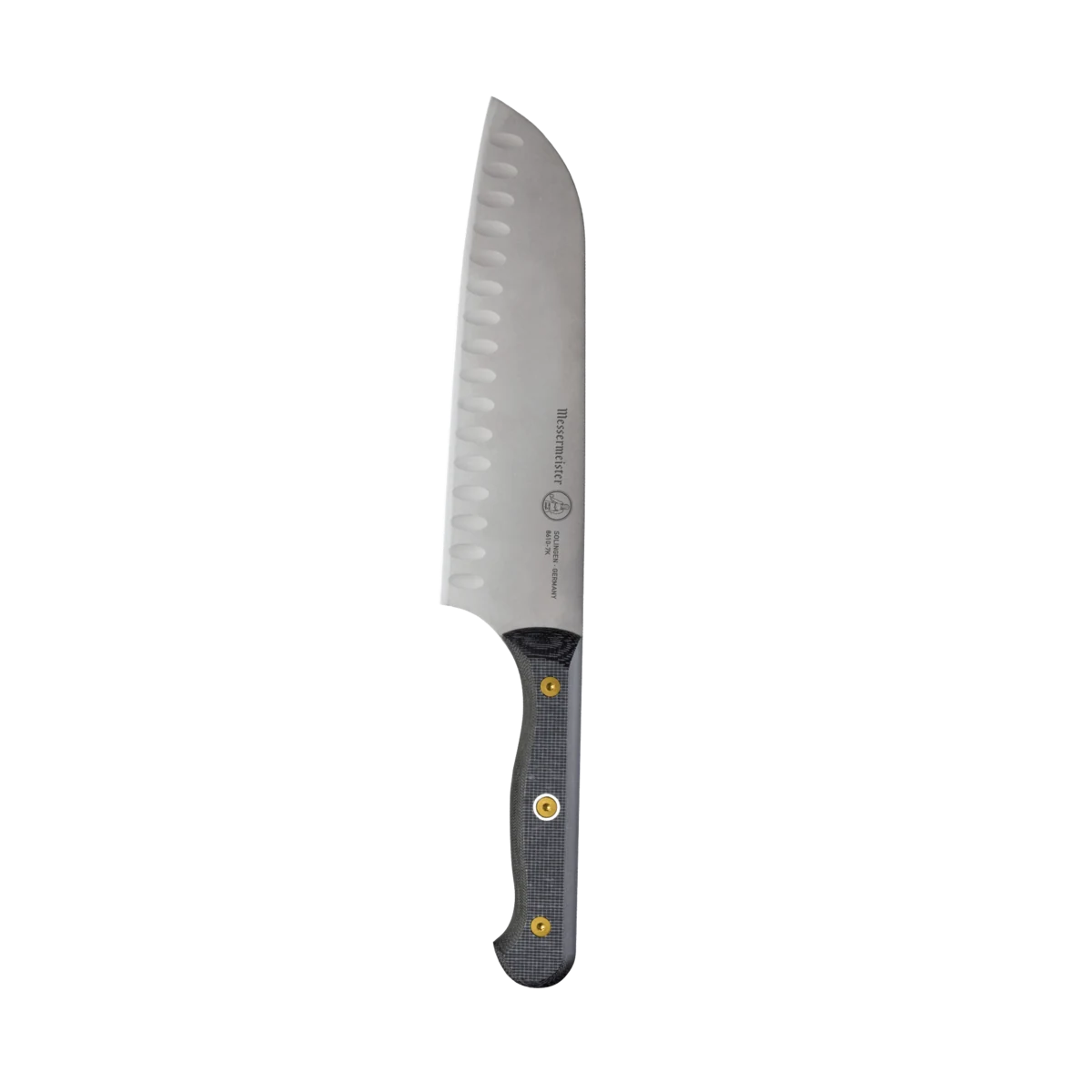
Hollow-ground · Linen Micarta
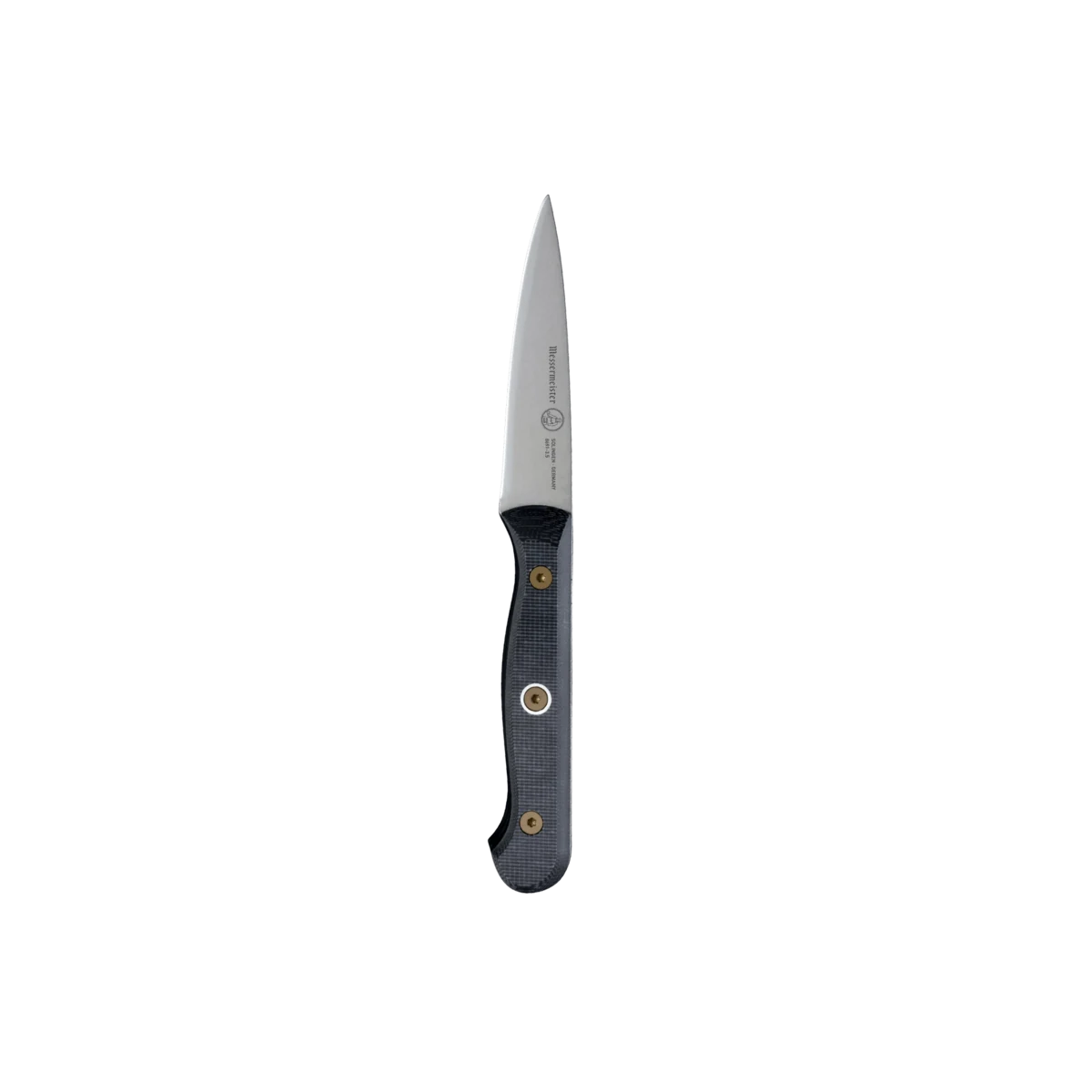
Precise control · Linen Micarta
The knife guide Five shapes, five jobs
The best knife is not the most specialized or the most expensive. It is the one whose shape matches the work you do most—and the way your hand naturally moves across the board.
The broad blade, pointed tip, and gentle curve cover the widest range of kitchen work. It has enough length for a pile of herbs or a large roast, while the curved edge supports the rocking motion many cooks already use.
A slightly flatter profile rewards a straighter, more compact stroke. Hollow-ground kullens along the blade help release damp vegetables and proteins instead of carrying every slice upward.
The straight edge meets the board from heel to tip, making clean downward cuts without a rocking motion. Its wide face also works as a bench scoop for moving chopped produce into the pan.
Longer than a paring knife and easier to maneuver than a full chef’s knife, this is the blade for quick prep when the big knife feels like too much—citrus, tomatoes, sandwiches, cheeses, and small cuts of meat.
The compact spear point brings the work close to your hand. Use it for peeling, trimming, deveining, coring, and detailed cuts where a wide blade would hide the ingredient beneath it.
Behind the build
Custom / Solingen
Stonewashed 1.4116 steel. Black linen Micarta. Brass hardware. A hand-finished 15° edge.
Adventure Chef
Chef knife, fillet knife, utensil, peeler-parer, cutting board, and a canvas case built to leave.
Push Button Multi Shears
Four-millimeter steel, a titanium coating, and push-button separation for a proper clean.
Custom, decoded Why the build matters
These are modern German work knives: cold-rolled and precision cut rather than made heavy for tradition’s sake. Every material choice is there to improve the cut, the grip, the maintenance, or the years the knife stays in rotation.
Thyssen-Krupp 1.4116 is cold rolled, then laser cut for an accurate blade profile. It brings the stain resistance and toughness a daily-use kitchen knife needs.
A three-stage edge is finished to 15 degrees per side. That acute geometry is the point: less material has to move through the ingredient, so the knife feels cleaner at the board.
The Custom blades are hardened to 57 Rockwell. The collection is designed as working cutlery—sharp, durable, and meant to be maintained instead of treated like a brittle display piece.
Messermeister introduced its demi-bolster construction in 1992 so the entire cutting edge can meet a stone or sharpener, including the heel that a full bolster blocks.
The ceramic stonewashed surface gives the blade a low-glare, work-ready finish. Everyday marks settle into the texture instead of becoming the only thing you notice.
Black linen Micarta brings a textured, stable handle to the collection. It feels secure without turning the knife into something visually loud.
Adventure Chef The Summit system
The Summit sets are not pocketknives pretending to be cookware. They are full-size folding prep tools, built for meals that begin far from a countertop and still deserve more than a dull multitool.
German X50 stainless blades meet carbonized maple handles. The satin-finished 6-inch chef and fillet knives fold down beside the rest of the kit, then everything zips into waxed canvas.
The same full field kitchen, built around distressed linen Micarta handles and ceramic-stonewashed X50 blades. It is the quieter, more utilitarian finish of the two.
Not an afterthought 9-inch multi shears
Kitchen shears get used on food, packaging, herbs, poultry, and whatever else lands on the counter. These are built accordingly: thick steel, aligned by a bearing pivot, separated by a button, and easy to clean all the way to the joint.
Keep it for life Care without ceremony
Good cutlery does not need precious treatment. It needs a few consistent habits: clean it by hand, keep the edge away from hard surfaces, and maintain it before “a little dull” becomes “why am I crushing this tomato?”
Use warm water and mild detergent. Dishwasher heat, aggressive detergent, and movement can damage the temper, finish, handle, and edge.
Do not leave the blade wet or let it air-dry. Rinse soon after acidic or salty foods such as citrus, tomatoes, vinegar, and brines.
Wood and quality synthetic boards are easier on an edge. Glass, stone, ceramic, and bare metal can dull a fine edge quickly.
Use a block, magnetic rack, sheath, or edge guard. A loose blade in a drawer is bad for the edge—and much worse for the next hand reaching in.
Choose the chef’s knife if you like a rocking motion, want more blade length, or want one familiar all-purpose shape. Choose the santoku if you prefer a shorter, flatter profile and straighter push cuts. Its kullens are especially useful with damp vegetables and proteins.
Not necessarily. A chef’s knife can handle vegetables well. The nakiri becomes worthwhile if produce is a large part of your cooking and you enjoy a straight up-and-down stroke, a wide blade for scooping, and full board contact from heel to tip.
The tools and layout are the same. Maple uses carbonized maple handles and a satin blade finish; Linen uses distressed linen Micarta handles and a ceramic stonewashed finish. Maple feels warmer and more traditional. Linen is the more understated, low-fuss field option.
Yes. Both Summit kits center on a 6-inch folding chef’s knife and a 6-inch folding fillet knife. They fold for transport, but open into real prep tools rather than short pocket blades.
No. Messermeister explicitly recommends hand-washing with warm water and mild detergent, then drying immediately. That protects the edge, blade temper, finish, and handle.
Messermeister describes its warranty as coverage against defects in materials or workmanship. Normal wear, misuse, improper care or storage, and product modifications are excluded. Registration requirements and full terms are provided by Messermeister.
California / Since 1981
Messermeister began as a family business and built its reputation by questioning what a German knife could do. The result is a line that feels considered in the hand and ready for a lifetime of use.
Rarely × Messermeister
Start with the one your cutting board—or camp table—has been waiting for.
Shop the complete edit